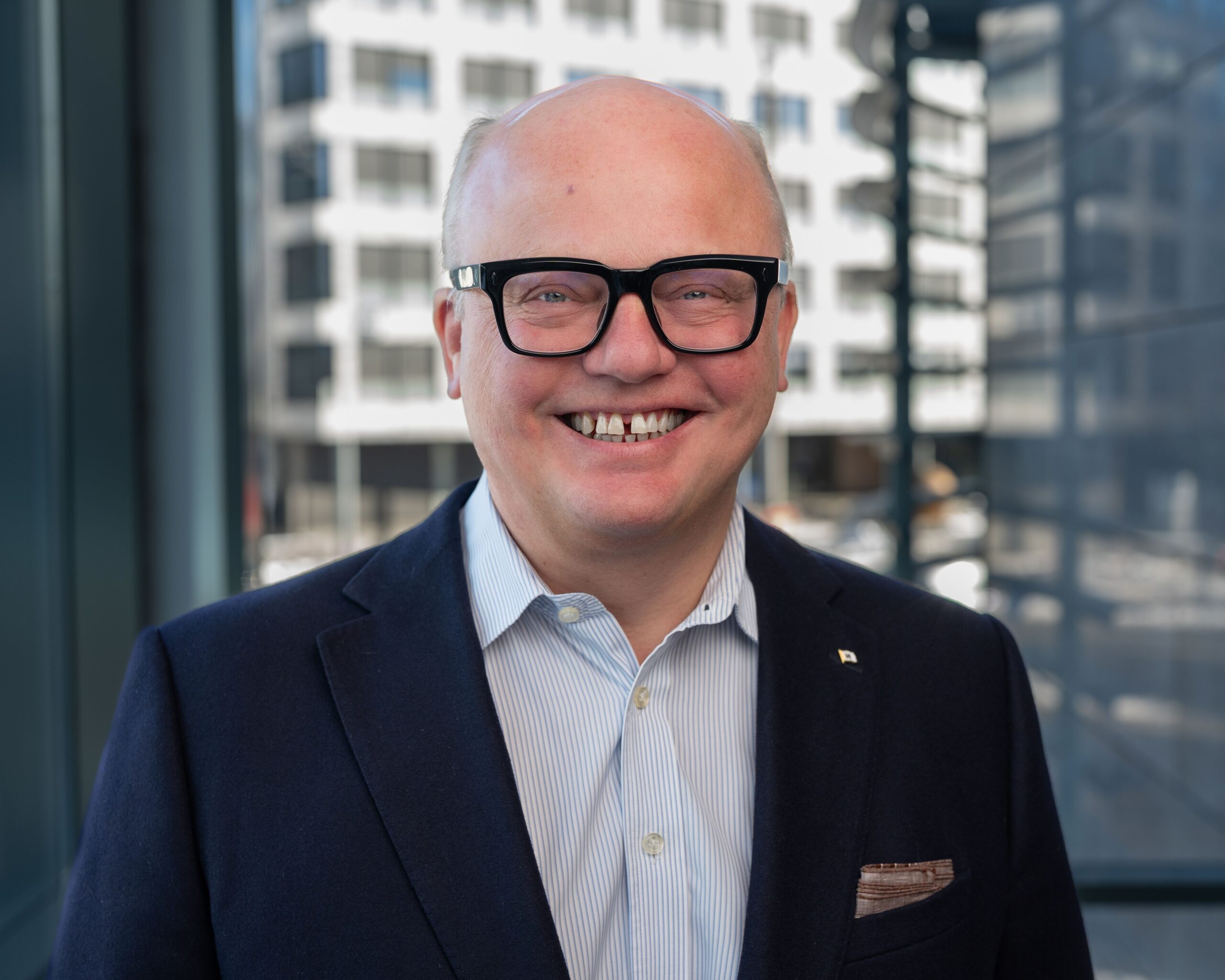
As Norwegian shipowner Höegh approaches its centenary, family scion Leif O Høegh sees plenty of reasons for confidence in maritime’s future. Flexibility, calculated risk-taking and a flair for managing uncertainty have served shipping well for a century – and will be just as important in the decades ahead.
Leif Høegh has seen enough of shipping to be wary of predictions.
The Höegh group celebrates its 100th anniversary in 2027, and that journey has seen wars, energy crises, technological change and big shifts in global trade.
Yet what gives Høegh confidence amid uncertainty is the industry’s record of finding a way through. “In the last 15 or 20 years we’ve coped with the financial crisis, tsunamis, ash clouds, the first pandemic in 100 years and ongoing conflicts of various kinds,” he says.
Add disruption affecting the Suez and Panama canals, the Red Sea and the Strait of Hormuz and the list becomes formidable. “And still the world goes on, and still shipping evolves and finds solutions. It’s quite remarkable how the industry, together with the logistics industry more broadly, continues to prove that it’s able to adapt.”
That confidence shapes the perspective the Chair of Höegh Autoliners and Vice Chair of DNV will bring to Oslo Ocean Days, where Höegh is a Main Partner.
Designing for change
For a shipowner, uncertainty has a practical consequence. Ships ordered today may still be operating in the 2050s. “You have to have business systems and business models that don’t presuppose a fixed operating environment,” Høegh says.
The same applies to vessel design. Höegh Autoliners has invested in larger ships, new propulsion systems and fuel flexibility to keep future options open.
“Optionality and flexibility built into vessel design and major decisions are essential because a 30-year ship life is outside of the horizon that you can forecast,” he says. “You need to build in the ability to change.”
The same thinking can be found elsewhere in the Höegh group. Höegh Evi is developing floating energy infrastructure designed to adapt to evolving energy needs. Led by Chair Morten Høegh, the company is developing maritime infrastructure for ammonia, hydrogen and CO2 transport. As they expand into the clean energy markets of the future, the company is applying principles that have shaped the group’s history: pioneering, adapting and investing in the long-term.
As this development implies, for Høegh collaboration does not remove the need for companies to take risks themselves. Shipyards, technology developers, class and research institutions can all help advance new solutions, but ultimately somebody has to be willing to invest in putting them into practice.
“Private companies, whether they’re owned by a family or stock-listed, need to be cognizant and prepared to take some innovation risk,” he says. “Because nobody else is going to do it.”
Höegh Autoliners’ first ammonia-capable ship is due next year, with no cargo customers underwriting the investment. “We got to the point where we said: we just need to start; we need to take that bet.”
Energy security enters the equation
Uncertainty over future marine fuels forms part of a much bigger shift in the global energy system. Høegh sees geopolitics adding another powerful consideration: energy security.
He points to the Philippines, where disruption around Hormuz shocked a fast-growing economy heavily reliant on imported Middle Eastern fuels. “In some areas it’s accelerating,” he says of geopolitical instability’s effect on the energy transition. For vulnerable countries, diversification can become as urgent as decarbonisation: “Making sure you don’t run out immediately is even more important.”
Höegh Evi is working hands-on to strengthen energy security through one of the world’s largest fleets of floating LNG terminals. While geopolitical tensions remain a key concern, the company also sees growing risks linked to infrastructure constraints and climate change. By connecting countries with global energy markets, floating terminals are helping to both diversify supply and build resilient energy systems around the world.
That matters directly to shipping. Fuels available over a vessel’s 30-year life will be shaped by energy security, infrastructure, competitiveness and climate policy – another reason to preserve flexibility.
Progress will also come from smaller gains. “I’m a great believer in micro-optimisation,” Høegh says, pointing to coatings, ballast management and operating practices alongside advances in vessel design, engine configuration and speed.
AI will contribute, but Høegh is wary of expecting one technology to transform shipping overnight. “I think AI is going to be enormously valuable,” he says. “But our industry is still a very physical industry.” Engineering choices and incremental improvements will continue alongside digital technology.
Ships will win
A larger concern is the fragmentation of the international system.
Shipping is inherently global, making cooperation and common frameworks vital. Bodies such as IMO, BIMCO and the International Chamber of Shipping allow countries and industry to keep finding common ground across political divides.
Yet he remains confident that trade will prevail. “Shipping will continue to play a very important role in building practical bridges between different parts of the world,” he says.
Maritime transport remains flexible, efficient and difficult for national economies to replace. “Politicians are there for four or eight years, but ships last for much longer. So, I think the ships will win in the end.”
Keeping people at the centre
Høegh believes another form of resilience deserves more attention: people.
One Höegh vessel spent three months trapped in the Strait of Hormuz, its crew keeping the ship ready to leave when circumstances allowed.
“For every ship, it’s an asset, it’s a lot of steel and it’s a lot of money, but it’s operated by people,” he says. “We need to make sure that ships are safe and attractive places to work, that seafaring is a valued career.”
Technology will change how crews work, but Høegh sees no imminent future in which they disappear.
Why Oslo?
Norway’s maritime strength, Høegh argues, rests on its technologically demanding industry, backed by marine engineering education, research, classification expertise and a critical mass of owners and operators. It is also strengthened by leaders who contribute well beyond their own businesses. As examples, Andreas Enger, CEO of Höegh Autoliners, also serves as President of the Norwegian Shipowners’ Association, while Morten Høegh chairs marine insurer Gard – reflecting a tradition of collaboration that helps drive the wider industry forward.
Oslo, in turn, has what he calls “strong convening power”. “The city is one of the natural homes of gatherings in the industry,” Høegh says. Shipping remains highly relationship-driven, where personal connections and individual leadership can influence how the industry develops. “Finding the right forums to attract and engage people is particularly important.”
That helps explain the group’s support for Oslo Ocean Days. Dialogue matters, but progress depends on companies turning discussion into decisions, investment and calculated risk.
For its centenary next year, Höegh plans to bring one of its ammonia-powered car carriers up the Oslo Fjord. “We’re looking ahead,” Høegh says. “We’re not a museum. We want to be at the forefront of innovation, investment and leadership for the next 100 years too.”
The centenary may offer a moment to reflect, but Høegh’s focus is firmly on what comes next.
“I’m very optimistic,” he concludes. “We’re investing a lot of money in ships that are going to last for three decades – I think that speaks for itself.”